
There is no item in your cart
Request a Free Quote
Table of Contents
ToggleTable of Content
Start Your Cosmetic Brand Today!
Introduction
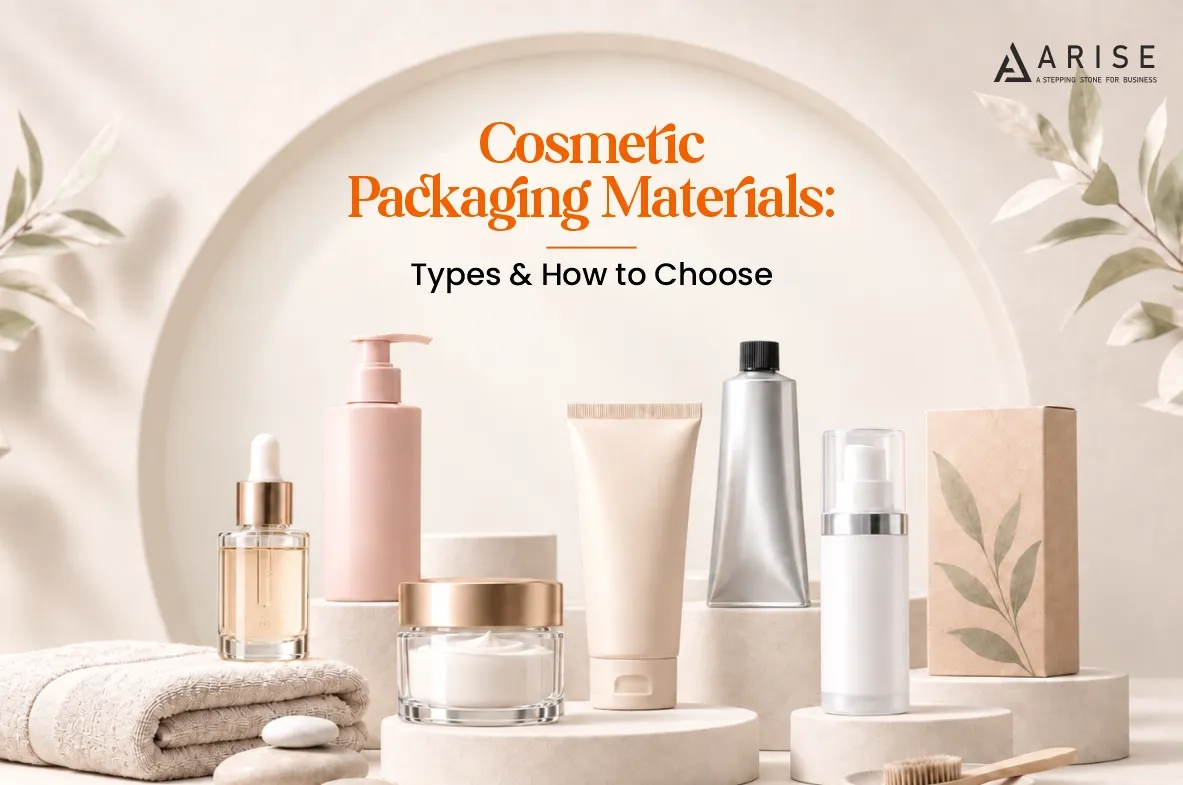
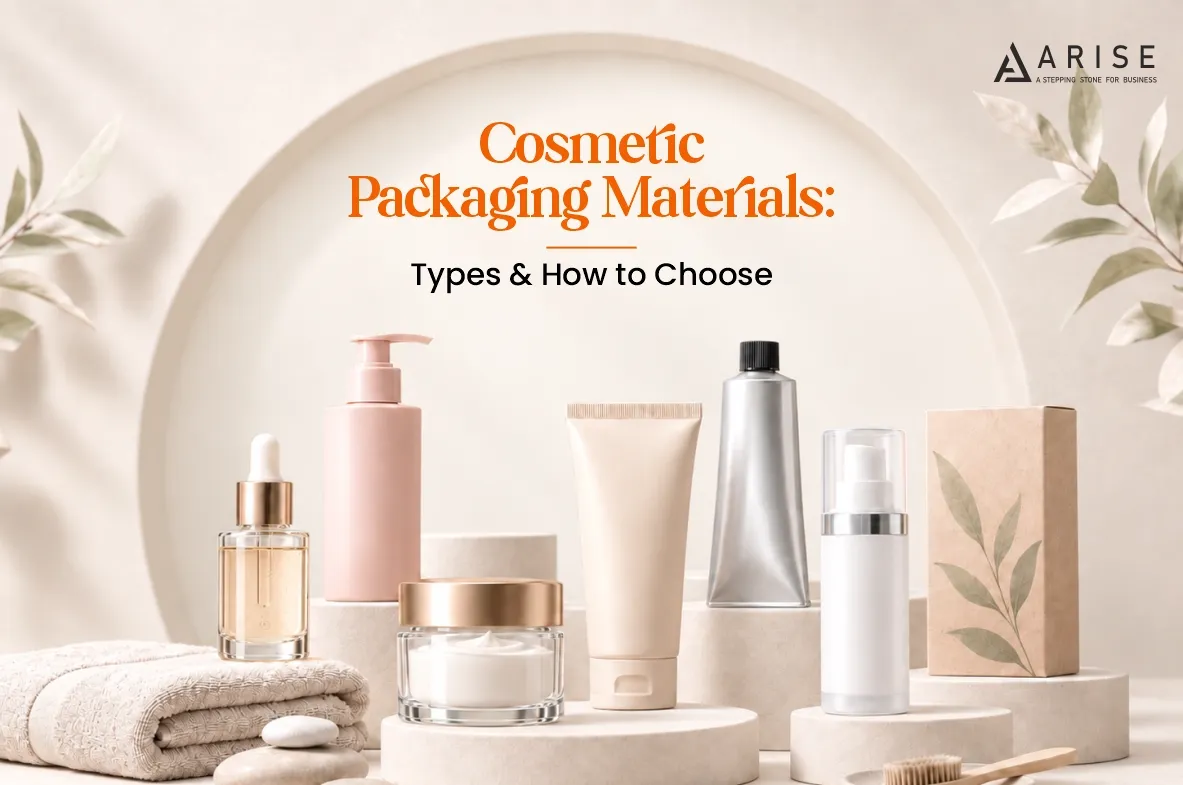
Cosmetic packaging materials are the containers, closures and secondary packaging that hold and protect a formulation from the time it leaves the production line to the moment a customer opens it. The material you pick, glass, plastic, aluminium, paper or a laminate, affects far more than how a product looks on a shelf.
It decides how long the formula stays stable, how much a single unit costs to produce, how easily it survives a courier delivery, and how much room you have left on the label for mandatory information.
For a brand founder working with a private label or contract manufacturer, packaging material selection is really a formulation and production decision, not a design one.
This guide walks through the main types of cosmetic packaging materials, compares glass, plastic and aluminium on the factors that actually matter for a growing brand, and sets out what to check before you finalise a packaging choice.
Quick Summary
Cosmetic packaging materials fall into a handful of practical categories, plastic, glass, aluminium, paper, laminates and PCR or bio based options, and no single one is right for every product. The correct choice depends on your formulation, how you plan to dispense the product, how you will ship it, and your budget at your current order volume. Testing the formula in the actual packaging before finalising it is what prevents a costly rework later.
Key Takeaways
- Cosmetic packaging materials fall into six practical categories: plastic, glass, aluminium, paper, laminates, and PCR or bio based variants.
- No single material outperforms the others across every factor, the right choice depends on the formulation, not the trend.
- Glass offers the best inertness and light protection but carries higher shipping cost and breakage risk than plastic or aluminium.
- Packaging selection should start with the formula’s sensitivity to light, air and moisture, then move to dispensing, cost and shipping.
- Stock packaging keeps MOQ lower than custom tooling, which is often the biggest lever a founder has over order volume.
- Testing the formula in its actual packaging before a full production run, a step Arise Cosmetic builds into its production process, is what prevents a costly late stage change.
What Are the Main Types of Cosmetic Packaging Materials?
Plastic is one of the most widely used cosmetic packaging materials because it is lightweight, durable and available in a wide range of shapes, finishes and dispensing formats. But not all plastics perform the same way.
Plastic Packaging Materials
Plastic remains widely used across skincare, hair care, body care, baby care and personal care because cosmetic manufacturers can mould it into many shapes and formats. It is also relatively lightweight, durable and practical for transport.
However, “plastic packaging” covers several different polymers.
- PET (Polyethylene Terephthalate) offers good clarity, which makes it a common choice for transparent shampoo, body wash, toner and lotion bottles.
- HDPE (High-Density Polyethylene) is more opaque and impact-resistant. Brands commonly consider it for shampoos, conditioners, lotions and other personal care liquids.
- LDPE (Low-Density Polyethylene) is softer and more flexible, making it useful for squeezable bottles, tubes and similar formats.
- PP (Polypropylene) is widely used for jars, caps, closures and dispensing components. Its properties make it particularly useful where the packaging needs repeated opening, closing or flexing.
- PETG provides high clarity and can create a thicker, more premium-looking pack, so brands often consider it for skincare bottles and jars where presentation matters.
- Acrylic and ABS also appear in premium cosmetic packaging, particularly in decorative outer components, jars, lipstick packaging and other rigid formats. In these packs, the material that touches the formulation may be different from the decorative outer shell.
The key point is that “plastic” is not one packaging material. PET, HDPE, LDPE, PP, PETG and other polymers have different barrier properties, chemical resistance, appearance and costs. Brands need to evaluate the specific resin rather than choosing plastic as a general category.
Glass Packaging
Glass is a common choice for serums, facial oils, fragrances, ampoules and premium skincare.
Glass is chemically inert, so it does not react with or absorb the formula inside it, which makes it a reliable choice for serums, facial oils and actives heavy formulations. Tinted or amber glass also blocks light, which matters for ingredients that degrade with UV exposure.
The trade off is weight and fragility. Glass costs more to ship, carries a higher breakage risk in transit, and usually costs more per unit at lower order quantities because of tooling and handling. It also tends to signal a premium position, which some brands use deliberately.
Aluminium and Metal Packaging
Aluminium gives brands an opaque, lightweight alternative to glass and provides an effective barrier against light. Manufacturers use it for formats such as tubes, bottles, tins and aerosol containers.
It also will not shatter like glass, although aluminium can dent during handling or transport.
The bigger consideration is formula compatibility. The formulation does not necessarily come into direct contact with bare aluminium. Manufacturers often use an internal lacquer, coating or liner selected according to the product being filled.
Brands should therefore confirm the internal coating and test the complete pack with the actual formulation rather than assuming that aluminium will suit every product.
Paper and Paperboard Packaging
Brands mostly use paper and paperboard as secondary packaging, the outer carton or box, rather than the primary container that touches the formula. Manufacturers increasingly use moulded pulp and rigid paperboard for solid formats like balms and pressed powders, usually adding an inner liner since paper alone offers little moisture or oxygen barrier.
Laminates and Flexible Packaging Materials
Laminates combine layers of plastic, foil and sometimes paper into a single flexible material that brands use for sachets, refill pouches and flexible tubes. They are lightweight and manufacturers can produce them at a low cost per unit, which is why single use sachets are so common in the Indian cosmetic market for sampling and travel sizes.
The multi-layer structure that gives laminates good barrier properties also makes them harder to recycle than a single-material container, which is worth factoring in if recyclability is a priority for your brand.
PCR, Biobased and Other Sustainable Packaging Options
PCR plastics, biobased polymers and mono-material designs are better understood as alternatives within the packaging categories above rather than completely separate packaging materials.
- PCR (post-consumer recycled) plastic contains resin recovered from products that consumers have already used. A PCR PET bottle is still a PET bottle, for example. The difference is that some or all of its resin comes from recycled material rather than entirely virgin material.
- Biobased plastic uses raw materials derived partly or fully from renewable biological sources. Biobased does not automatically mean biodegradable, so brands should not use the terms interchangeably.
- Mono-material packaging aims to construct more of the pack from one material family. A predominantly PE or PP pack, for example, may simplify sorting and recycling compared with a pack made from several difficult-to-separate materials.
These options are worth evaluating alongside the primary material choice, but sustainability claims should not replace technical checks. Ask the supplier for material specifications, recycled-content information and samples, then confirm that the pack still meets the formulation, filling and performance requirements.
For a deeper look at these options, see Arise Cosmetic’s guide to sustainable cosmetic packaging solutions.
Glass vs Plastic vs Aluminium Packaging: How Do They Compare?
These three materials cover most primary cosmetic packaging decisions, so it helps to compare them directly against the factors a brand founder actually weighs up.
| Factor | Plastic | Glass | Aluminium |
|---|---|---|---|
| Weight | Low | High | Low |
| Breakage risk | Low | Higher | Low, but can dent |
| Design flexibility | High | Moderate | Moderate to high |
| Transparency | Available with materials such as PET | Clear, tinted or opaque options | Opaque |
| Light protection | Depends on resin and colour | Better with tinted or opaque glass | Strong |
| Shipping | Lightweight and practical | Heavier and needs more breakage protection | Lightweight |
| Premium appearance | Depends on design | Commonly associated with premium products | Can provide a premium look |
| Formula compatibility | Depends on polymer and formulation | Suitable for many formulations, but testing still matters | Often requires an appropriate internal coating |
| Common uses | Shampoo, lotion, cleansers, creams | Serums, oils, fragrances, premium skincare | Tubes, bottles, aerosols and selected personal care products |
Which Packaging Material Is Right for Cosmetic Brands?
There is no single correct material for every cosmetic product.
Glass often suits products where formula protection, presentation and a premium feel matter more than pack weight. Plastic works w`ell when brands need lightweight, durable packaging with a wide choice of formats and dispensing systems. Aluminium offers an opaque, lightweight option where light protection and a distinctive pack are priorities.
The better question is not “Which material is best?” but “Which material works best with the formulation, dispensing system, manufacturing process and sales model?”
Choose packaging material that works with your formula, not just your shelf design.
How Do You Choose the Right Cosmetic Packaging Material?
Material selection should start with the product, not with a Pinterest board or packaging catalogue.
Here are the main factors cosmetic brands should evaluate.
Start With the Cosmetic Formulation
The formulation should shape the packaging decision from the beginning. Factors worth checking include:
- Water and oil content
- Alcohol content
- Fragrance and essential oils
- pH
- Active ingredients
- Sensitivity to oxygen or light
A material that works well with one serum will not necessarily perform the same way with another, which is why formulation and packaging decisions usually happen together, not one after the other.
The complete package matters too. A bottle can be compatible while a gasket, spring, liner, adhesive or coating creates a problem, so packaging compatibility needs to consider the whole system rather than the main container alone.
Consider Viscosity and the Dispensing System
A material can be fully compatible with the formula and still create a poor user experience if the dispensing system does not suit the product. Low viscosity serums usually work best with droppers or fine mist pumps, lotions with pumps or squeeze bottles, and thick creams with jars, tubes or airless systems.
Shampoo and conditioner need closures that hold up to repeated wet area use, and sprays need a dispensing system that delivers a consistent output every time. The container, material, closure and dispenser work as one system, not as separate decisions.
Check Protection From Light, Air and Moisture
Light, oxygen and moisture can affect the appearance, odour or performance of sensitive formulations over time, and packaging controls that exposure through material choice, colour, wall thickness and dispensing design. A clear pack may look attractive on a shelf but may not suit a light-sensitive formulation without additional protection.
This is why stability testing and packaging compatibility testing evaluates a formula under different storage conditions such as heat, light and humidity cycling, rather than approving packaging on appearance alone.
Check Filling, Sealing and Production Compatibility
Packaging has to work inside the manufacturing facility, not just look good in a sample. Before finalising a choice, confirm that the container and closure suit the filling equipment, filling speed, sealing requirements, capping method, labelling, coding and secondary packing the cosmetic manufacturer actually uses.
A distinctive bottle shape can look impressive as a sample and still create problems on a filling line. Involving your manufacturer early avoids expensive packaging changes later, which is why a manufacturer already set up for bottle, jar, tube and sachet filling, as Arise Cosmetic is, can flag feasibility issues before a full production run rather than after one.
Consider Cost, MOQ and Customisation
Container price is only one part of packaging cost. Closures, pumps, labels, printing and decoration, cartons, mould development, tooling, freight, storage, assembly, testing and wastage all add to the total.
Stock packaging usually keeps minimum order quantities lower and development simpler, while fully custom packaging needs moulds, higher MOQs and longer development timelines. A startup does not need a custom mould to look premium. A well selected standard container with strong decoration and branding often gives a young brand more flexibility across its first few production runs.
Consider Transportation and Sales Channel
A pack built mainly for a retail or salon shelf faces different handling than one shipped individually across the country through e-commerce. Worth checking: pack weight, breakage risk, leakage, temperature changes, vibration, stacking and courier handling, along with any need for secondary protective packaging.
A heavier pack also adds up in freight cost once you are shipping thousands of units, so this is a cost factor as much as a durability one.
Evaluate Sustainability Across the Complete Packaging System
Do not judge sustainability from the primary container alone.
A recyclable bottle may still use a pump, label or decorative component that is difficult to separate. A glass pack may be widely recyclable but heavier to transport. A lightweight plastic bottle may use less material but depend heavily on resin type and local recycling infrastructure.
Look at the complete system, including the primary container, closure, label, secondary packaging, recycled content, refill potential and transport weight.
Sustainability should also work alongside product protection. A pack that leads to leakage, breakage or unnecessary product waste is not automatically the better option simply because one component carries an environmental claim.
Plan your packaging early so cost, MOQ, filling, and sustainability work together
Which Packaging Materials Suit Different Cosmetic Products?
There is no fixed material rule for every product category, but the table below gives a practical starting point.
Manufacturing process still need to confirm the final choice.
| Cosmetic Product | Materials Commonly Considered | What to Evaluate |
|---|---|---|
| Face serum | Glass, PET, PETG, PP-based systems | Light and oxygen sensitivity, pump or dropper compatibility |
| Facial oil | Glass, PET and compatible plastic systems | Oil and fragrance compatibility, closure performance |
| Face cream and moisturiser | Glass, PP, PETG and compatible jar or airless systems | Formula compatibility, viscosity and dispensing |
| Shampoo | PET, HDPE, PP components | Impact resistance, viscosity and cap or pump performance |
| Conditioner | PET, HDPE and flexible plastic formats | Viscosity and squeeze or pump performance |
| Body lotion | PET, HDPE, PP components | Pumpability, weight and transport |
| Face or body wash | PET, HDPE, PP | Viscosity, wet-use handling and dispensing |
| Lip balm and solid products | PP-based sticks, aluminium tins, paper-based formats | Product hardness, dispensing and heat exposure |
| Powders | Plastic, metal or paperboard-based compacts and containers | Moisture protection, closure and product handling |
| Samples and travel sizes | Laminated sachets, pouches and small rigid packs | Barrier performance, seal quality and portability |
These are commonly considered options, not automatic recommendations. A PET bottle that works well for one shampoo may not suit another formula, and a glass serum bottle may still need a different closure or dispensing system depending on the product.
The final pack should always be checked against the actual formulation, closure, manufacturing process and intended shelf life.
What Should Brands Test Before Finalising Cosmetic Packaging?
Testing the formula in the intended packaging before committing to commercial production helps catch problems while they are still easier and less expensive to correct.
Formula-Packaging Compatibility
The first question is whether the formula and packaging continue to perform properly when they stay in contact over time.
Compatibility and stability studies may monitor:
- Colour or odour changes
- Separation or viscosity changes
- Swelling or deformation
- Stress cracking
- Corrosion
- Leakage
- Product loss
- Changes to coatings, liners or seals
- Damage to labels or decoration
Formulation-packaging interaction is one of the more common causes of degradation, discolouration and lost product performance after a batch reaches the market, which is why compatibility testing should run on the intended final packaging wherever possible, not a substitute container.
Closure and Dispensing Performance
The container is only one part of the pack. Closures, pumps, sprayers, droppers and applicators need testing through repeated use, checking questions such as:
- Does the pump prime properly?
- Does each dose stay reasonably consistent?
- Does the closure leak?
- Does the nozzle clog?
- Does the cap loosen over time?
- Can customers dispense a thick product easily?
These checks matter because the customer experiences the formula through the dispensing system, not through the container material alone.
Filling and Sealing Compatibility
Testing then moves from the lab to production conditions. Confirm the packaging performs correctly during filling, sealing, capping and labelling on the manufacturer’s actual equipment.
A component with the wrong dimensions or a weak seal can slow production and compromise the finished pack, so it is worth checking component fit and sealing performance before committing to a full batch.
Transportation and Packaging Integrity
Finally, consider what happens once the pack leaves the factory. Temperature changes, handling, stacking, drops and vibration can reveal weaknesses that do not show up during initial sampling.
Check finished packs for:
- Leakage
- Cracking or breakage
- Pump or cap damage
- Carton deformation
- Label damage
- Product loss
Testing under realistic transport and storage conditions is what confirms the packaging protects the product through the complete supply chain, not just on the shelf.
Test your packaging before full production so leaks, cracks, and dispensing issues do not reach customers.
Conclusion
Choosing the right cosmetic packaging material is as much a formulation and manufacturing decision as it is a design one. Starting with the formula, checking protection and dispensing needs, and confirming production compatibility early can help avoid packaging changes that delay production or add unexpected costs.
At Arise Cosmetic, we support cosmetic brands with formulation development, manufacturing and packaging coordination so these decisions can be planned together rather than handled separately at the end.
Planning packaging for your next cosmetic range? Talk to our team to discuss your product and packaging requirements.
FAQs
Q1. What factors affect the cost of cosmetic packaging?
Material type, order quantity, and whether a custom shape needs tooling all affect cost, along with the dispensing mechanism and any decoration or finishing. Stock packaging in standard shapes is usually the lowest cost route at low order volumes.
Q2. Which plastic is commonly used for cosmetic packaging?
PET, HDPE, LDPE and PP are widely used, depending on the formulation, container and dispensing requirement.
Q3. Is glass better than plastic for cosmetic packaging?
Neither is better in every case. Glass offers better inertness and light protection, while plastic is lighter, less prone to breakage, and usually less expensive at lower order volumes. The right choice depends on the formulation and how you plan to ship the product.
Q4. What is PCR plastic in cosmetic packaging?
PCR, or post consumer recycled plastic, is resin reprocessed from used plastic and remoulded into new packaging. It functions like standard plastic packaging but reduces reliance on virgin material, though quality can vary by supplier.
Q5. Does packaging material affect cosmetic product stability?
Yes. Materials that let in light, air or moisture can degrade sensitive actives and shorten shelf life, which is why brands usually pair formulas with actives like vitamin C or retinol with opaque, airless or tinted packaging.
About the Author

Arise Cosmetic
Arise Cosmetic is a GMP-certified, ISO-compliant, FDCA-approved private label cosmetic manufacturer based in Gandhinagar, Gujarat. Founded in 2017, the team has developed 2,000+ formulations across hair care, skin care, baby care, men's grooming, and intimate hygiene. Arise Cosmetic works with D2C brand founders, salon owners, direct selling companies, and first-time beauty entrepreneurs across Globally, guiding them from formulation brief to bulk delivery under one roof.