
There is no item in your cart

The right format depends on the product. A serum may work well in a dropper bottle, while another formula may be better suited to an airless pump. The pack should follow the product’s needs rather than the packaging trend.
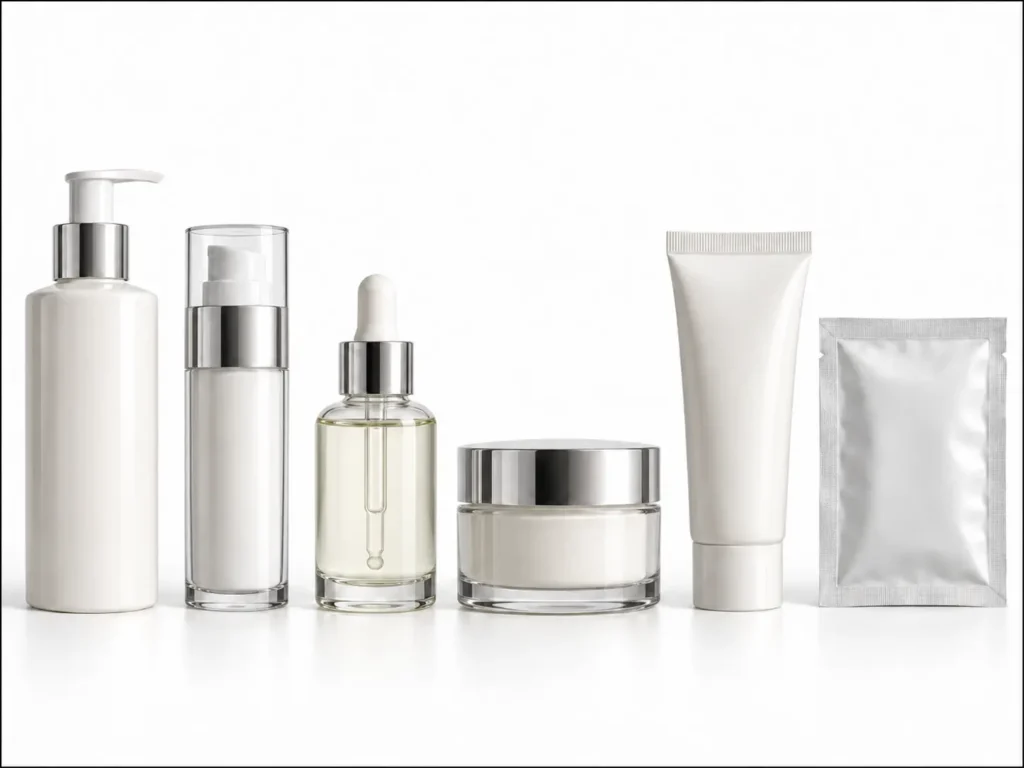
Secondary packaging is the packaging placed around the primary pack. It does not normally come into direct contact with the cosmetic formulation.
A printed carton around a serum bottle is the most familiar example. Secondary packaging can also include sleeves, inserts, trays, rigid boxes and product kits.
Brands often pay more attention to this layer because it carries much of the visual identity seen on a retail shelf or during unboxing. But its role goes beyond appearance.
Main Functions of Secondary Packaging
- Protects the primary pack from scuffs, knocks and pressure in handling
- Presents the product with a far bigger print area than a bottle offers
- Carries the outer label, including the net contents declaration
- Shows tampering, since a sealed carton or shrink film makes an opened pack obvious
- Groups products into combo kits, gift sets and multipacks
Examples of Secondary Packaging in Cosmetics
Common formats include:
- Folding cartons: The most common format, used for serums, creams, sunscreens and toothpaste
- Rigid boxes: Premium gift sets and festive kits
- Paperboard sleeves: A lower-cost way to add print area to a jar or tube
- Inserts and trays: Hold bottles in place inside a kit
- Shrink-wrapped combo packs: Shampoo and conditioner bundles, for example
- Leaflets: Usage directions, such as the patch test instructions every hair dye package must include under Rule 37 of the Cosmetics Rules, 2020.

Does Every Cosmetic Product Need Secondary Packaging?
No. Many shampoos, body washes, lotions and tubes are sold without a separate carton.
Secondary packaging becomes more useful when the primary pack needs extra protection, when the brand needs more space for information, or when shelf presentation and gifting matter.
A brand should therefore ask one simple question: Does this extra layer serve a clear purpose for the product?
If not, adding it may only increase material, printing and packing costs.
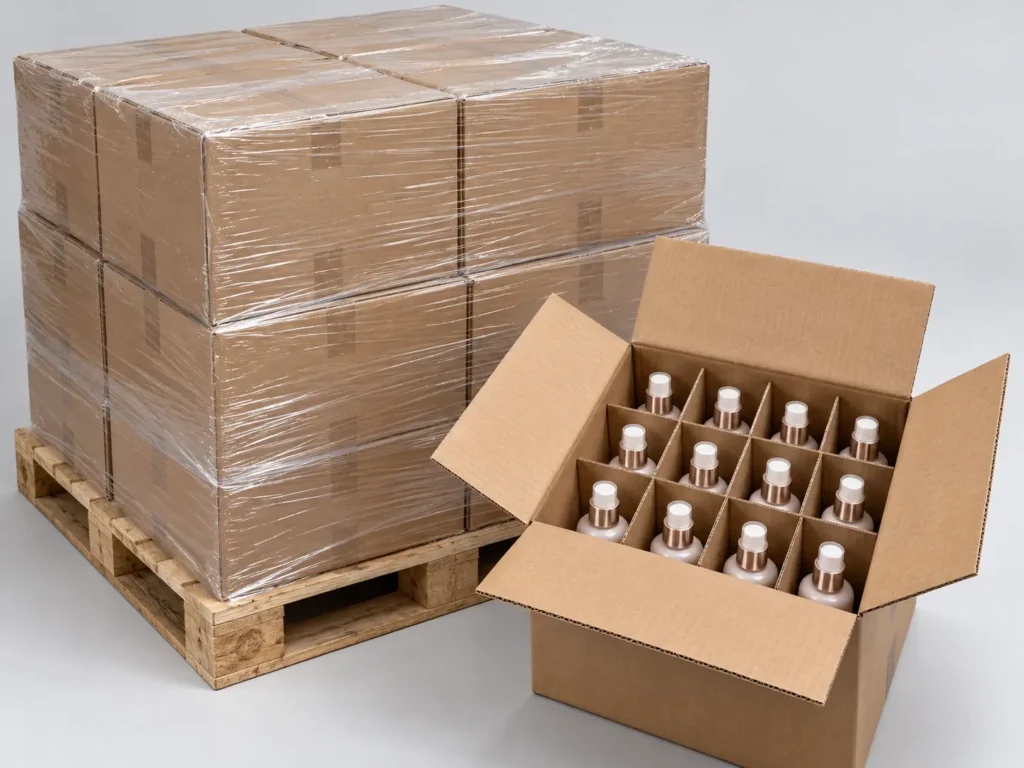
Tertiary packaging sits outside the consumer-facing packaging system. Its main purpose is to group finished products so manufacturers, warehouses, distributors and retailers can store and transport them efficiently.
Consumers usually do not see this packaging.
For example, once 24 boxed serums are packed inside one corrugated master carton, that master carton performs a tertiary packaging function.
Main Functions of Tertiary Packaging
Tertiary packaging helps:
- Protect finished stock from crushing, vibration and movement during transport
- Organise products into fixed carton quantities for easier handling
- Support warehousing and stacking during storage and distribution
- Keep shipments identifiable through carton markings such as product, batch and quantity
- Reduce transit damage, especially for glass bottles, jars and pump packs
The design depends on the product. Glass bottles may need partitions, while heavier jars may require stronger corrugated cartons.
Examples of Tertiary Packaging in Cosmetics
Common examples include:
- Corrugated master or shipper cartons: Hold multiple finished units
- Partitions and dividers: Help prevent bottles or jars from hitting each other
- Stretch or shrink wrap: Keeps grouped cartons or pallet loads secure
- Pallets: Support bulk movement through warehouses and transport
- Protective cushioning: Reduces movement and impact inside shipping cartons
The easiest way to understand the three packaging levels is to look at what each layer is responsible for.
| Factor | Primary Packaging | Secondary Packaging | Tertiary Packaging |
|---|---|---|---|
| Contact with formula | Direct | No direct contact | No direct contact |
| Main purpose | Contain, protect and dispense | Protect, present and communicate | Group, store and transport |
| Typical examples | Bottle, jar, tube, sachet | Carton, sleeve, insert, rigid box | Master carton, dividers, pallet |
| Usually seen by consumer | Yes | Often | Usually not |
| Major consideration | Formula compatibility | Protection, branding and presentation | Logistics and transit protection |
Take a face serum as a simple example:
Serum formula → Dropper bottle → Folding carton → Corrugated master carton
The dropper bottle is primary packaging because it contains the serum. The printed carton is secondary packaging because it surrounds the bottle. The corrugated carton holding multiple finished packs is tertiary packaging because it supports storage and distribution.
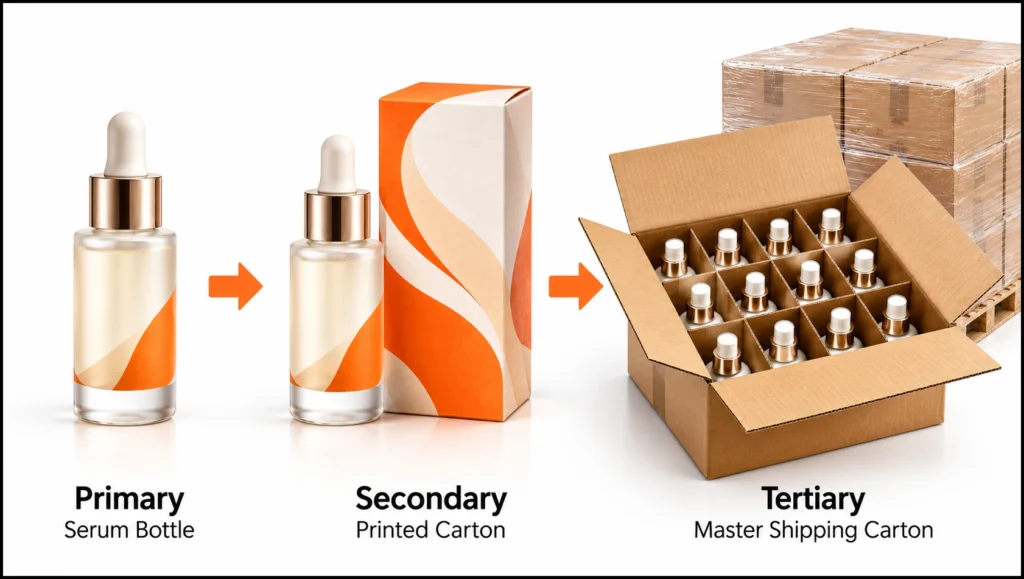
Plan from the inside out. Start with the formula, add each layer only when it earns its place, and test the whole system before you scale.
1. Start With the Formula and Primary Pack
Choose the primary pack while the formula is still being developed. Consider viscosity, dispensing, sensitivity to air or light, filling requirements and compatibility with the intended container.
Also decide early between stock and custom packaging. Stock bottles and jars usually involve lower MOQs and shorter lead times, while custom moulds, decoration and printed components can increase both. Understanding cosmetic manufacturing MOQ can help brands plan this more realistically.
2. Decide Whether Secondary Packaging Adds Value
A carton or sleeve should have a clear purpose, such as protecting the primary pack, providing more information space or improving retail and gift presentation.
For some D2C products, an individual carton may add cost and material without adding much value. If you skip it, however, the primary pack still needs enough space for the required product information.
Reducing unnecessary layers can also support a more sustainable packaging approach.
3. Plan Tertiary Packaging Around Distribution
Think about how the finished product will travel.
Distributor and retail orders may move in master cartons and pallet loads, while individual D2C orders need suitable shipping protection. Glass bottles may require dividers or cushioning, while heavier jars may need stronger corrugated cartons.
Right-size the shipper too. Too much empty space can increase movement and packing material, while an undersized carton may put unnecessary pressure on the products inside.
4. Test the Complete Packaging System Before Scaling
Before bulk production, test the packaging as one complete system. Check:
- Formula and pack compatibility
- Closure and seal performance
- Label fit, adhesion and legibility
- Secondary-pack fit
- Protection during handling and transport
A pilot filling and packing run supports better quality control by revealing problems before they affect a larger quantity of finished stock.


Arise Cosmetic
Arise Cosmetic is a GMP-certified, ISO-compliant, FDCA-approved private label cosmetic manufacturer based in Gandhinagar, Gujarat. Founded in 2017, the team has developed 2,000+ formulations across hair care, skin care, baby care, men's grooming, and intimate hygiene. Arise Cosmetic works with D2C brand founders, salon owners, direct selling companies, and first-time beauty entrepreneurs across Globally, guiding them from formulation brief to bulk delivery under one roof.